UNOFFICIAL OFFICIAL WEBSITE JAPAN
U.O.W.J.
Japan's History
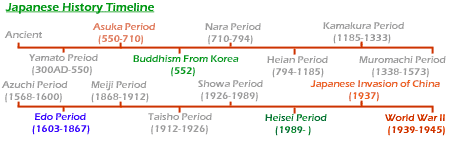

Japan's history is a deep and rich one. Japan has been around for a long time. The earliest historic time in which Japan has been recorded as exsisting with human inhabitents is around 13000 BC. From this time through around 300 BC. This is known as the Jomon period. Not much is recorded about this time besides the fact that these early inhabitents were hunters and fishers and gatherers. The poetry of this time gave this period its name.

From 300 BC to 300 AD, the Yayoi period ran. In this time, Japan's civilization began evolving with the introduction of rice in about 100 BC. The people began forming around large owners of land. Some Chinese travelers of the han and wei dynasties reported that the queen of Japan at that time was Himiko or Pimiku. This period also brought Korean culture into Japan and iron and other metals. Yayoi was named after pottery.
The Kofun period lasted from around 300 AD to around 538 AD. This period was actuall named for the burial places created for politicial leaders (simular to the english word coffin). In this period, Japan began to congregate around one person as their emperor. At around 400 AD, Japan was united as Yamato Japan. This extended from Kyushu to the Kinai plain (excluding Kanto, Tohoku, and Hokkaido). The emperor resided in the capital and was constantly moved from place to place; however, the emperor became mostly a figurehead at that time (simularly to today's queen of England). The Soga clan actually took power and control the government. Japan practiced Shintoism at this time.

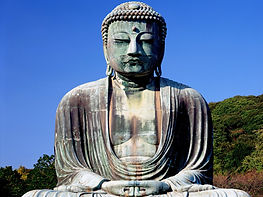
Next is the Asuka period lasting from around 538 AD to around 710 AD. In this period, many Chinese practices were adopted including but not limited to: Buddhism, Confucianism and Taoism, the Chinese Writing System (now known as kanji), the tax system, Taiku reforms, and much much more. In 645, the Nakatomi no Kamatari started the era of the Fujiwara clan. In the 11th century, the military class (samuri) began to arise.
In 710 the first permanant Japanese capital was created called Nara which was modeled after the Chinese capital. Buddist monasteries were built in the capital. These monasteries were so popular that the capital was later moved to Nagaoka in 784. In this time period, Chinese influence fell; however, that does not mean that it didn't remain. Chinese culture still played a large part in Japanese influences. The Japanese government soon modeled China's for better trade. Many arts started taking after Chinese arts also.

The Fujiwara family controlled the politicial scene using many intermarriages. The clan's power reached its peak in 1016 then decreasd after that which made Japan's political order far too difficult to maintain. Many farmers and other land owners had to pay for samuri for personal protection and property protection. This is how the military class of Japan rose.
The Fujiwara surpremesy came to an end at 1068 when Go-Sanjo took power.
To learn more about Japan's vast history in later periods click here or here.